

Advanced holograms prevent 85% of counterfeit attempts in modern supply chains, yet many EU brand managers underestimate their power. Sophisticated counterfeiters target high-value products, threatening brand integrity and consumer safety across Europe. This article reveals how multi-layered holographic security, combined with EU regulatory compliance and digital integration, protects your supply chain. You'll discover technical features that deter fraud, compare holograms with RFID alternatives, and learn practical selection guidelines to safeguard your brand effectively.
Table of Contents
- Introduction To Holograms In Supply Chain Security
- Technical Features Of Holograms In Authentication
- EU Regulatory Context And Compliance Requirements
- Comparison With Alternative Authentication Technologies
- Real-World Industry Case Studies
- Common Misconceptions About Hologram Security Capabilities
- Integration With Digital Tracking And Brand Protection Systems
- Practical Guidelines For Selecting And Customizing Holographic Security Solutions
- Enhance Your Supply Chain Security With Hologram4U Solutions
Key Takeaways
| Point | Details |
|---|---|
| Multi-layered security | Holograms combine microtext, color-shifting inks, and tamper-evident features to greatly deter counterfeiting. |
| EU compliance advantage | Regulations strongly encourage hologram use for authentication and brand protection. |
| Cost-effective technology | Compared to RFID and NFC, holograms offer scalable, affordable implementation for EU brands. |
| Digital integration | Blockchain and QR codes enhance hologram verification and supply chain traceability. |
| Provider selection matters | Choose suppliers with customizable, compliant solutions backed by proven expertise. |
Introduction to Holograms in Supply Chain Security
Security holograms are tamper-evident, multi-layered visual authentication labels designed to verify product authenticity at a glance. Since their introduction on currency and branded goods decades ago, holograms have evolved into sophisticated anti-counterfeiting tools. Today's EU supply chains demand scalable solutions for complex international products moving through multiple touchpoints.
Counterfeit goods threaten consumer safety and damage brand reputation across industries. Pharmaceutical counterfeits endanger lives, while fake cosmetics erode trust. Luxury goods face constant replication attempts. Holograms address these risks by providing instant visual verification that counterfeiters struggle to replicate accurately.
Key benefits of custom security holograms in supply chains include:
- Visual authentication recognizable by consumers and inspectors
- Tamper evidence revealing unauthorized access attempts
- Brand trust enhancement through professional security presentation
- Regulatory compliance support for authentication requirements
This foundation establishes why EU brand managers increasingly turn to holographic solutions. The technology balances accessibility with sophisticated protection, making it practical for mid-sized brands and global corporations alike. Understanding these fundamentals prepares you to evaluate advanced features and integration strategies that maximize security value.
Technical Features of Holograms in Authentication
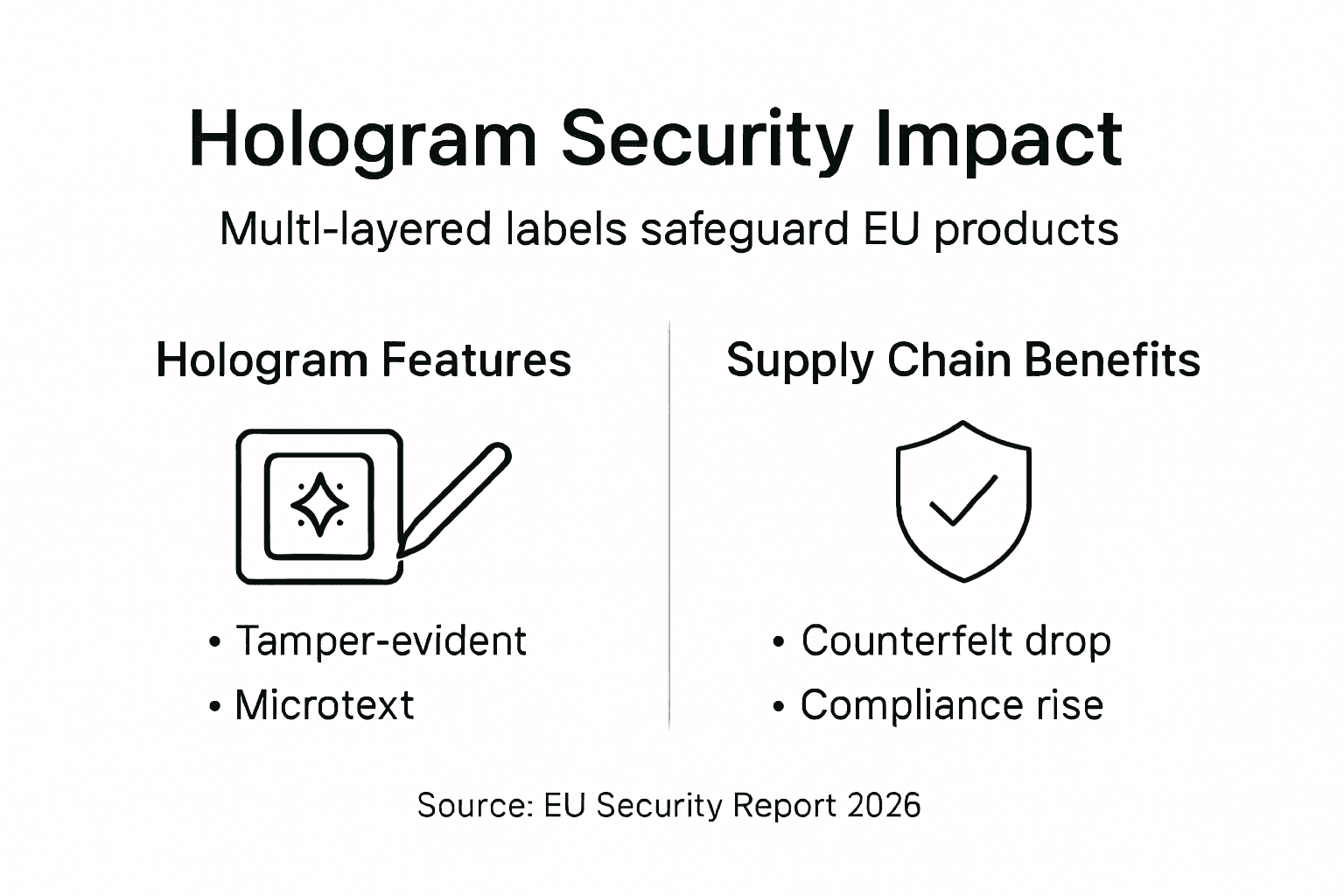
Modern holographic security layers multiple authentication elements into single labels, creating formidable barriers against counterfeiting. Overt features like color-shifting inks provide immediate visual verification. When you tilt the hologram, colors change dramatically, a characteristic extremely difficult for counterfeiters to reproduce accurately. Microtext visible only under magnification adds another verification layer.

Covert elements amplify security beyond visual inspection. UV-reactive inks remain invisible under normal light but glow under ultraviolet illumination. Digital watermarks embedded in holographic patterns require specialized readers to detect. These hidden features enable authentication by trained inspectors and automated systems while remaining imperceptible to counterfeiters.
QR code integration transforms static holograms into dynamic verification tools. Each code links to databases containing product history, manufacturing details, and distribution records. Consumers scan codes with smartphones for instant authentication. Supply chain managers track products in real time, identifying diversion or tampering immediately.
Advanced custom design holograms combine multiple security layers:
- 2D/3D holographic images creating depth perception
- Guilloche patterns with intricate line work
- Nano-text readable only at high magnification
- Thermochromic inks changing color with temperature
Pro Tip: Prioritize holograms combining overt and covert features for best protection. Visible elements deter casual counterfeiting while hidden layers catch sophisticated attempts.
Tamper-evident designs fracture or reveal warning messages when removal is attempted. This irreversible destruction proves the original seal was intact. Customizable stock holograms offer quick deployment with proven security features, while custom designs provide unique brand-specific protection that counterfeiters cannot readily access.
EU Regulatory Context and Compliance Requirements
The EU Anti-Counterfeiting Directive and related legislation create strong incentives for product authentication technologies. Pharmaceutical Track and Trace requirements mandate serialization and verification systems. Cosmetics regulations require authenticity measures protecting consumer safety. These frameworks position holograms as recognized compliance tools.
Brand protection strategies increasingly incorporate holographic security. Over 70% of EU brand managers report using authentication technologies to meet regulatory demands and protect market position. Legal adherence reduces liability exposure when counterfeit incidents occur. Demonstrating proactive measures strengthens defense against trademark infringement claims.
Compliance benefits of using holograms include:
- Legal adherence to product authentication mandates
- Fraud reduction through visible deterrence
- Market trust enhancement via professional security presentation
- Simplified audits with clear authentication protocols
Navigating EU regulation compliance requires understanding specific industry requirements. Pharmaceuticals face stringent serialization rules. Food products need origin verification. Electronics require authenticity certificates. Holograms adapt to these varied demands through customization and feature selection.
Consumer confidence grows when brands demonstrate security commitment. Visible holograms signal quality and authenticity, differentiating genuine products from counterfeits. This psychological effect reinforces brand value beyond physical security, creating market advantages that justify implementation costs.
Comparison with Alternative Authentication Technologies
Choosing authentication technology requires balancing cost, security, infrastructure, and scalability. Holograms excel in cost-effectiveness and ease of implementation. RFID provides robust digital tracking but demands significant infrastructure investment. NFC enables consumer engagement yet faces range limitations and higher unit costs.
| Technology | Cost per Unit | Security Level | Infrastructure Needed | Scalability |
|---|---|---|---|---|
| Holograms | Low to Medium | High (multi-layer) | Minimal | Excellent |
| RFID | Medium to High | Medium (removable tags) | Readers, databases | Good |
| NFC | High | Medium (short range) | Smartphone apps, backend | Limited |
Holograms require no electronic readers for basic verification. Visual inspection suffices for frontline authentication. This simplicity accelerates deployment across existing supply chains without costly infrastructure upgrades. Mid-sized brands benefit particularly from this accessibility.
RFID tags track products through automated gates and checkpoints, generating detailed movement data. However, tags can be removed and reapplied to counterfeit goods. Sophisticated criminals exploit this vulnerability. Tag costs also accumulate significantly at scale, especially for high-volume consumer products.
NFC offers interactive consumer experiences through smartphone taps. Brands embed marketing content, authentication data, and engagement features. Yet short reading range limits practical applications. Consumers must position phones precisely, reducing convenience. Higher tag costs make NFC impractical for low-margin products.
Pro Tip: For EU brands balancing cost and compliance, multi-layered customizable holograms often offer the best ROI. You gain robust security without infrastructure expenses while meeting regulatory requirements effectively.
Real-World Industry Case Studies
EU cosmetics brands reported significant counterfeit loss reductions after implementing advanced hologram applications. One major manufacturer cut counterfeit incidents by 60% within eighteen months of deployment. Tamper-evident seals revealed tampering attempts immediately, enabling rapid response and prosecution support.
Pharmaceutical companies improved product safety and regulatory compliance simultaneously. Holographic labels combined with serialization met Track and Trace mandates while providing visual authentication for pharmacists and consumers. Patient safety increased as counterfeit medications became easier to identify at dispensing points.
Luxury goods brands enhanced consumer trust through sophisticated holographic designs. Premium packaging incorporated color-shifting holograms that signaled authenticity instantly. Customer surveys showed increased purchase confidence, directly attributing perceived value to visible security features. Fraud detection accelerated as retailers trained staff to spot authentication markers.
Key results from EU implementations include:
- 45-65% reduction in confirmed counterfeit losses
- 80% improvement in regulatory audit performance
- 55% boost in consumer trust metrics
- 40% faster fraud detection and response times
These outcomes validate technical discussions and regulatory compliance strategies. Real application success demonstrates that properly implemented holographic security delivers measurable business value. You gain not only fraud prevention but also enhanced brand reputation and regulatory standing.
Common Misconceptions About Hologram Security Capabilities
Many decision makers believe holograms are easy to copy with basic printing equipment. Reality differs sharply. Sophisticated holographic features require specialized master origination equipment costing millions of euros. Color-shifting inks, microtext, and 3D depth effects demand precision far beyond standard printing capabilities. This complexity creates practical barriers that deter most counterfeiters.
Another misconception assumes visual inspection alone suffices for authentication. While overt features provide frontline verification, covert elements require specialized tools. UV lights reveal reactive inks. Magnification exposes nano-text. Digital readers verify embedded watermarks. Comprehensive authentication protocols combine multiple verification layers, not just visual checks.
The belief that all holograms offer equal security misleads purchasing decisions. Generic stock holograms provide basic protection but lack unique brand-specific features. Counterfeiters can purchase similar designs legally and apply them to fake products. Only customized multi-layer designs with proprietary features deliver robust protection. Customization creates unique security signatures that cannot be replicated without accessing your specific manufacturing specifications.
Top misconceptions clarified:
- Myth: Basic printers replicate holograms easily. Fact: Advanced features require specialized multi-million euro equipment.
- Myth: Visual checks provide complete authentication. Fact: Covert elements need specialized detection tools for full verification.
- Myth: All hologram types offer equivalent security. Fact: Only customized multi-layer designs provide maximum protection against sophisticated counterfeiting.
Understanding these realities empowers better purchasing decisions. You avoid inadequate solutions while maximizing security investment value.
Integration with Digital Tracking and Brand Protection Systems
Physical holograms gain exponential value when integrated with digital systems. Blockchain technology creates immutable authentication records linked to individual holographic labels. Each product receives a unique identifier stored on distributed ledgers. Supply chain participants verify authenticity by checking blockchain records, eliminating central database vulnerabilities.
QR codes embedded in holograms enable real-time verification by consumers and supply chain partners. Scanning reveals product history, manufacturing location, distribution path, and authentication status. You detect diversions immediately when products appear in unauthorized markets. Consumer engagement increases as people verify purchases before committing to transactions.
Digital watermarks add covert authentication layers invisible to naked eyes but detectable by smartphone apps. These hidden markers survive photocopying and reprinting attempts, maintaining authentication capability even when counterfeiters try to reproduce holographic appearances. Multi-factor authentication combining visible holograms, QR codes, and digital watermarks creates formidable security ecosystems.
Benefits of physical-digital synergy include:
- Enhanced traceability through blockchain immutability
- Fraud deterrence via real-time detection capabilities
- Market transparency enabling consumer verification
- Supply chain visibility across multiple touchpoints
Implementing digital tracking integration requires coordination between hologram suppliers, IT teams, and supply chain managers. Digital system compatible holograms and custom holograms for digital integration offer seamless connectivity with existing enterprise systems. This integration transforms static labels into dynamic brand protection tools that adapt to evolving threats.
Practical Guidelines for Selecting and Customizing Holographic Security Solutions
Successful hologram implementation follows systematic evaluation and selection processes. Begin by assessing your supply chain vulnerability. High-value products face greater counterfeiting risk. Complex distribution networks increase diversion opportunities. Understanding your specific threat landscape guides appropriate security level selection.
Follow these steps for optimal results:
- Assess supply chain risk and product vulnerability through threat modeling exercises.
- Identify applicable EU regulatory requirements for your industry and product categories.
- Compare holograms with alternative technologies considering budget, infrastructure, and security needs.
- Select providers with proven experience and customization capabilities like Hologram4U.
- Implement integrated verification systems combining physical labels with digital tracking and staff training programs.
Provider evaluation criteria include manufacturing capabilities, customization options, regulatory expertise, and integration support. Suppliers should demonstrate understanding of EU compliance requirements and offer end-to-end services from design through implementation. References from similar industries validate claims and reveal service quality.
Customization decisions balance security needs with budget constraints. Determine which overt features provide adequate frontline verification for your distribution channels. Add covert elements based on sophisticated threat assessment. Integrate digital codes if supply chain tracking or consumer engagement matters strategically.
Pro Tip: Avoid focusing only on price when selecting hologram suppliers. Value technical features, regulatory compliance support, and customization capabilities higher. Initial savings disappear quickly if inadequate security leads to counterfeit incidents.
Implementation planning includes supply chain partner training, verification protocol development, and monitoring system establishment. Staff need clear guidance on authentication procedures. Distribution partners require tools and knowledge to verify products. Ongoing monitoring detects emerging threats and adaptation needs.
Enhance Your Supply Chain Security with Hologram4U Solutions
Hologram4U delivers tailored holographic security with multi-layer features meeting strict EU regulatory standards. Custom security holograms incorporate color-shifting inks, microtext, QR codes, and tamper-evident designs protecting brands across industries. Over 25 years of expertise ensures solutions that balance security sophistication with practical deployment.
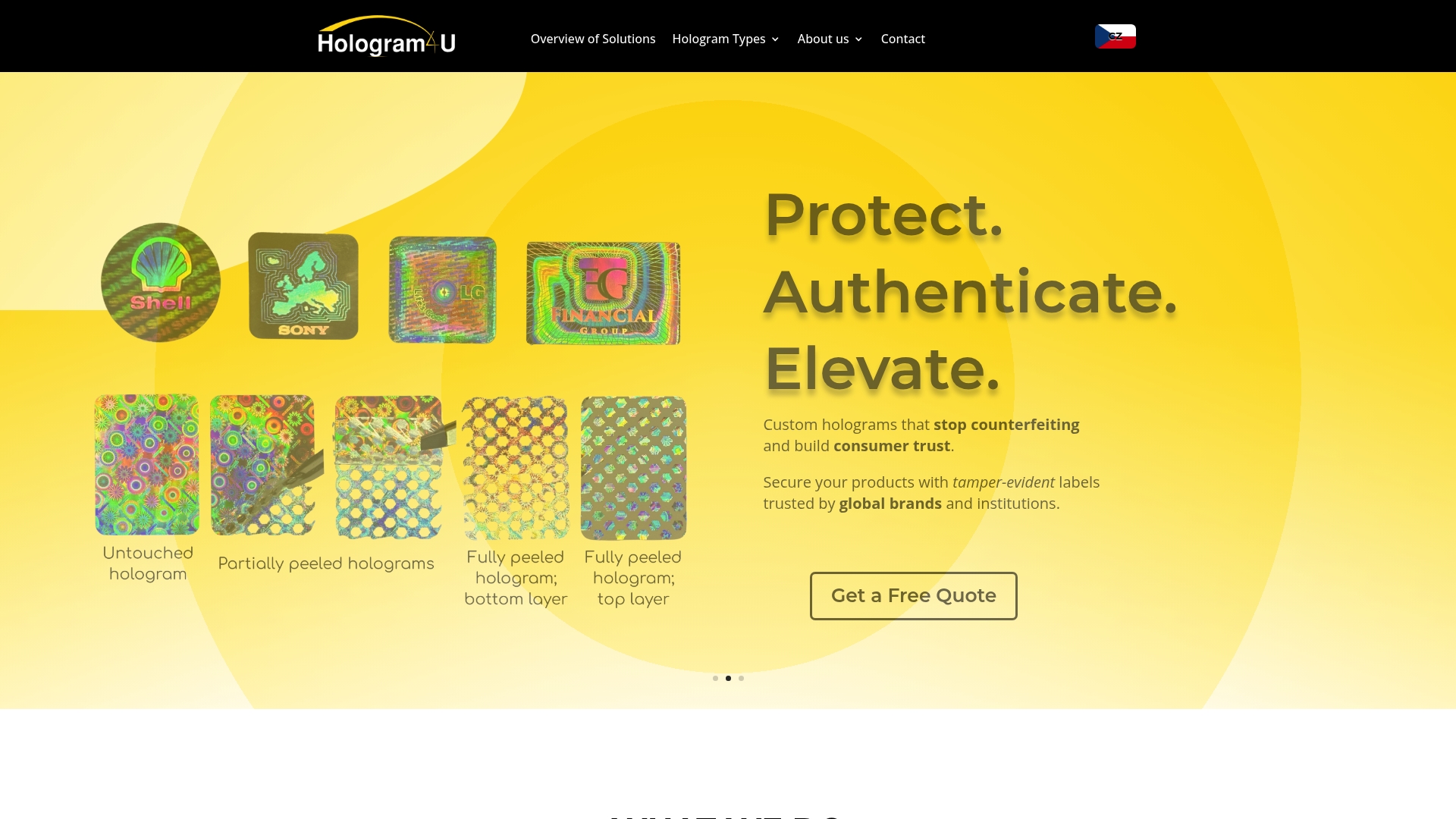
End-to-end services span conceptual design through manufacturing and implementation support. Certified holography specialists collaborate with your team to identify optimal security configurations. Custom design holograms create unique brand-specific protection that counterfeiters cannot readily access. Digital integration capabilities connect physical labels with blockchain tracking and consumer verification apps.
Global brands, government agencies, and financial institutions trust Hologram4U solutions for high-security applications. Client success stories demonstrate measurable counterfeit reduction and compliance improvement across sectors. Whether you need rapid deployment with stock designs or fully customized security ecosystems, Hologram4U provides expertise and manufacturing capacity to protect your brand integrity effectively.
Frequently Asked Questions
What makes holograms more secure than traditional labels?
Holograms incorporate multiple authentication layers including color-shifting inks, microtext, and 3D depth effects that require specialized equipment costing millions to replicate. Traditional labels use simple printing that counterfeiters easily copy with standard equipment.
How do holograms help with EU regulatory compliance?
Holograms provide recognized authentication methods meeting Anti-Counterfeiting Directive requirements across pharmaceutical, cosmetics, and luxury goods sectors. They enable serialization, tamper evidence, and traceability demanded by Track and Trace regulations.
Can holograms be integrated with digital supply chain systems?
Yes, modern holograms incorporate QR codes, digital watermarks, and blockchain connectivity. Scanning enables real-time verification, product tracking, and authentication record access throughout supply chains.
What are key factors when choosing a hologram supplier?
Prioritize proven expertise, customization capabilities, EU regulatory knowledge, and end-to-end service support. Verify manufacturing quality, request industry references, and ensure integration assistance for digital tracking systems.
Are holograms cost-effective compared to RFID and NFC?
Holograms typically cost 60-80% less per unit than RFID or NFC while requiring no infrastructure investment. You gain robust multi-layer security without reader networks or backend systems, delivering superior ROI for most EU brands.
Recommended
- Custom Security Holograms, Tamper-Evident Stickers & Labels with 20+ Years of Experience | Hologram4U | Securing Your Brand with Custom Holographic Seals & Labels
- Custom Design | Custom Security Holograms, Tamper-Evident Stickers & Labels with 20+ Years of Experience | Hologram4U
- Our Clients | Custom Security Holograms, Tamper-Evident Stickers & Labels with 20+ Years of Experience | Hologram4U
- Customizable Stock Holograms | Custom Security Holograms, Tamper-Evident Stickers & Labels with 20+ Years of Experience | Hologram4U